



Natural Repose and Constrained Posture
Natural repose describes the body’s preferred, low-effort alignment when joints, muscles and connective tissues are not forced into sustained or contorted positions.
In contrast, constrained or contorted posture arises when vision demands, seating, workstation geometry or habitual behaviours require joints to operate outside neutral ranges for prolonged periods.
The Ergonomic Office FrameWork™
A Unified System - Four Pillars
Structured through the P O S T U R E™ Comfort Model
The Core Principle
The body does not want to be “held upright.”
It wants to settle into low-load alignment - a state of minimal muscular effort, balanced skeletal support, active movement and sustainable comfort.
That state is:
Natural Repose
Neutral head
Balanced pelvis
Relaxed shoulders
Distributed load
Capacity for movement
The Four Pillars exist to engineer that outcome.
The P O S T U R E™ Comfort Model™
P O S T U R E™ is the organising logic.
The Four Pillars are the applied mechanical drivers.
When aligned, they channel the body toward Natural Repose.
The Four Pillars
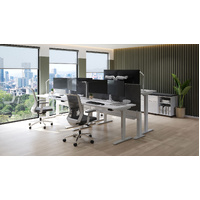
• S E E™ - Vision & Visual Demand
S - Screen Height & Position
E - Eye Distance & Depth
E - Environment & Visual Load
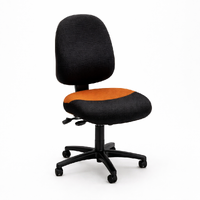
• S E A T™ - Seating & Pelvic Support
S - Seat Pan Support
E - Ergonomic Geometry
A - Adaptive Support
T - Time-Based Comfort
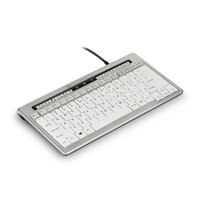
• A R M S™ — Reach & Upper Limb Support
A - Arm Support
R - Reach Zones
M - Movement Freedom
S - Surface Interaction
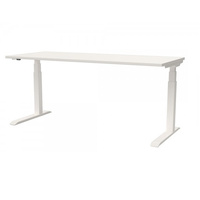
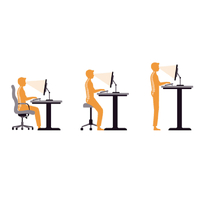
• S P A S™ - Sit · Perch · Active · Stand
S - Sit
P - Perch
A - Active
S - Stand
.png)
◯ S E E™ - Visual Demand
Visual alignment drives cervical posture.
Monitor height, distance and gaze angle influence:
-
Head weight distribution
-
Cervical load
-
Forward flexion tendency
If S E E™ is wrong, the body collapses forward.
When correct, the head balances naturally over the spine - reducing muscular strain and preserving neutral alignment.
Outcome: Reduced neck loading → supports Natural Repose.
◯ S E A T™ - Seating Geometry
The pelvis governs spinal alignment.
Seat pan contour, density and backrest interaction influence:
-
Pelvic rotation
-
Lumbar curvature
-
Load transfer through ischial support
Correct S E A T™ geometry stabilises the pelvis in neutral and supports the spine’s natural “S” curve.
This is structural support - not softness.
Outcome: Stable base → enables Natural Repose.
◯ A R M S™ - Reach Mechanics
Upper limb reach determines shoulder and thoracic tension.
Keyboard, mouse and interface positioning in compact reach zone influence:
-
Shoulder elevation
-
Scapular stability
-
Thoracic rounding
If A R M S™ is excessive or extended, muscular tension increases and posture destabilises.
When compact and supported, shoulders relax and the upper body settles.
Outcome: Reduced upper body strain → supports Natural Repose.
◯ S P A S™ - Posture Variation
The body is not static.
Sit
Perch
Active Stand
Shift
Move
S P A S™ enables dynamic alignment — reducing static load and allowing tissue recovery.
Movement is not optional - it is biologically required.
Outcome: Sustained comfort over time → protects Natural Repose.
Natural Repose
(Low-Load, Sustainable)
In natural repose:
-
Joints operate close to mid-range rather than end-range
-
Muscles cycle naturally between activity and rest
-
Load is distributed across structures rather than concentrated
-
Micro-movement occurs organically throughout tasks
This state supports:
-
Reduced cumulative strain
-
Improved circulation
-
Postural neutrality across the working day
Natural repose is not a single posture.
It is enabled through a combination of vision, support, alignment, and opportunities for movement.
Constrained & Contorted Posture
(High-Load, Unsustainable)
Constrained posture occurs when:
-
Joint angles are held near end-range
-
Movement is limited or discouraged
-
Load accumulates at colliding pressure points
Over time, this increases the likelihood of localised aggravation and early fatigue.
Common Points of Aggravation
Wrists & Hands
Common contributors:
-
Sustained wrist extension or deviation
-
Elevated or unsupported forearms
-
Excessive reach to keyboard or pointing devices
Increased risk:
-
Elevated forearm muscle loading
-
Localised discomfort or aggravation
Neutral wrist alignment, forearm support, and reach optimisation reduce sustained loading.
Shoulders & Neck
Common contributors:
-
Visual strain driving head and neck craning
-
Prolonged arm elevation
-
Forward reach beyond neutral zones
Increased risk:
-
Upper-back fatigue associated with a postural “C-curve”
-
Neck discomfort and postural compromise
Lower Back & Pelvis
Common contributors:
-
Pelvic roll associated with a postural “C-curve”
-
Collapsed lumbar posture
-
Prolonged sedentary positioning
Increased risk:
-
Increased spinal loading
-
Reduced performance sustainability
-
Early fatigue and discomfort
Hips & Lower Limbs
Common contributors:
-
Constrained hip angles
-
Static, prolonged weight-bearing
-
Limited posture change
Increased risk:
-
Reduced circulation
-
Increased effort required to maintain posture
Key Insight
Discomfort rarely arises from a single posture.
Risk accumulates through duration, constraint, contortion and repetition.
Natural repose is enabled through posture support combined with movement, not instruction alone.
Risk increases when constrained posture persists without opportunity for adjustment or change.
Practical Application
Comfort is supported through:
-
Natural repose and stature - pelvis stable and upright, spine maintaining a natural “S-curve”
-
Natural joint alignment - low baseline muscular effort
-
Reach within functional comfort zones
-
Regular posture transitions
-
Micro-movement throughout tasks, preventing static strain from accumulating
From contorted constraint to natural repose - the ergonomic office P O S T U R E Model ™ supports comfort and sustainable, naturally active postures at work.
ergonomic office P O S T U R E Model™
Essential conditions required for sustainable comfort and posture support in seated and active work environments.
The ergonomic office P O S T U R E™ Comfort Model is an integrated ergonomic framework that brings together:
-
Body support
-
Seating behaviour
-
Reach mechanics
-
Vision
-
Active movement
Together, these elements support natural posture, reduce cumulative strain and enable people to work comfortably across the day - not just moment to moment.
P O S T U R E™ — Key Elements
P — Pelvic Stability
Stable pelvic support forms the foundation of healthy posture, enabling upright sitting without excessive muscular effort.
Primary system: S E A T™
O — Optimal Spine Curve
Maintains the spine’s natural S-curve to reduce strain, support circulation, and prevent slouched or collapsed postures.
Primary system: S E A T™
S — Seat Comfort
Comfort derived from correct load distribution, pressure management and supportive seat pan geometry.
Primary system: S E A T™
T — Transition Support
Supports smooth movement between sit, perch and active stand postures, recognising that healthy sitting involves regular change and micro-movement.
Primary system: S P A S™
U — Upper Back Engagement
Encourages upright thoracic support without rigidity, reducing fatigue during focused or prolonged tasks.
Primary system: S E A T™
R — Relaxed Shoulders
Promotes relaxed upper-body posture through arm positioning, compact reach zones, and interface depth and height.
Primary systems: A R M S™ and S E E™
E — Everyday Sustainability
The ability to maintain comfort, functional capacity, and wellbeing across the working day through posture variation and movement over time.
Primary systems: S E E™ · S E A T™ · A R M S™ · S P A S™
Core Principle
Ergonomics is not about holding the body still.
It is about reducing constraint and restoring natural repose through posture support and movement.
Align this with SEE™, ARMS™, SEAT™, SPAS™ as a unified system
Usage Statement : The ergonomic office P . O . S . T . U . R . E Comfort Model™ and its primary systems - S E E™, S E A T™, A R M S™, and S P A S™ ... form part of the Ergonomic Office Framework.This explainer framework and associated headers, text, diagrams and graphics present a structured, explanatory approach to office posture, vision, reach, seating behaviour and active movement…informed by applied ergonomics and observed workplace behaviour. The Ergonomic Office Framework is an open explanatory model and may be freely referenced and reproduced by health professionals, ergonomists, WHS practitioners, allied-health professionals and clinicians for educational and reference purposes provided that clear attribution to ergonomic office is retained. The names, structure, terminology and visual representations of the ergonomic office P . O . S . T . U . R . E™ Comfort Model and its primary systems S E E™, S E A T™, A R M S™ S P A S™ remain the intellectual property of ergonomicoffice and must not be modified, rebranded, sub-licensed or presented as independent or third-party commercial models or systems without prior written permission.






.png)